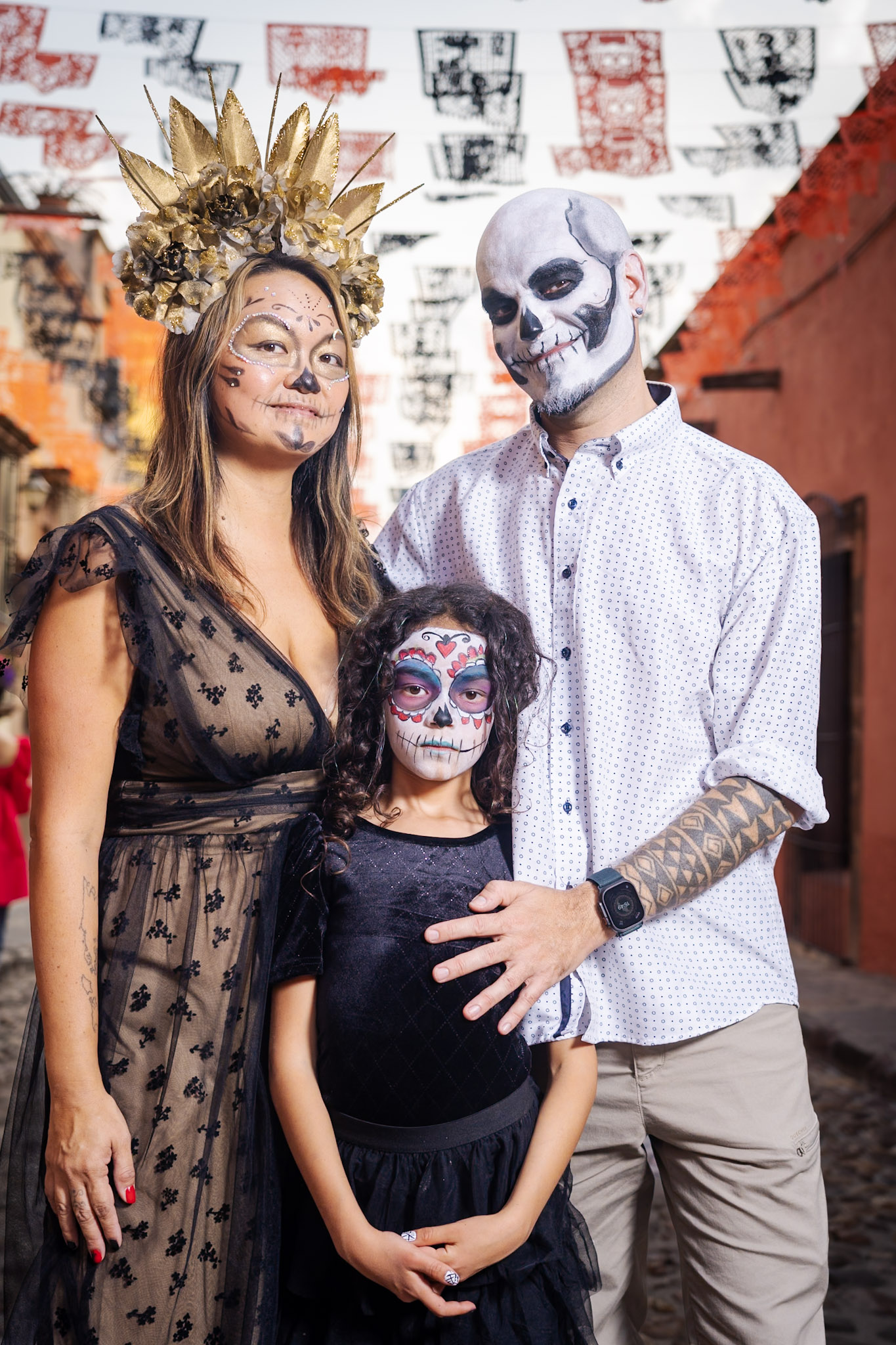
How I Moved to Mexico: My Step-by-Step Journey
Ready to leave the hustle behind and chase the Mexican dream? From residency visas and rentals to healthcare and banking, here is my detailed guide on how to move to Mexico.
Four years ago, we packed our lives into five suitcases and moved to Mexico for a more laidback and outdoorsy life. Looking back, moving to Mexico was one of the best things that we’ve done. It taught us so much: from the importance of community and family to slowing down and enjoying the smaller things in life.
What I’ve noticed over the past years is that more and more of us are moving to Mexico in pursuit of the “Mexican Dream”. It’s about enjoying a slower pace of life, prioritizing family dinners over overtime work, and rediscovering the things that actually matter. It is realizing that you don’t want to get through life — you want to live to the fullest, preferably with a taco in hand and the sun on your face.
If you’ve read my previous post on why we moved to Mexico, you know the emotional journey that brought us here. If you too are feeling that pull to leave the grind behind and build a life in Mexico, you need a roadmap. Here is everything we’ve learned after living here for four years.

Quick Steps to Move to Mexico: A Checklist
If you’re the kind of person who needs a clear roadmap before diving in, here it is. This is the sequence that makes the whole process manageable:
- Decide your visa type, tourist (up to 180 days), temporary resident (up to 4 years), or permanent resident.
- Gather your documents, passport, completed application, financial proof (bank statements or income evidence).
- Apply for your visa at a Mexican consulate in your home country, before you arrive in Mexico.
- Get a Mexico eSIM so you have data the second your plane lands.
- Bring or wire money for initial expenses, rental deposits, and first-month costs.
- Book short-term accommodation (Airbnb or a local listing site) for your first month.
- Find long-term housing once you’ve had time to explore neighbourhoods properly.
- Set up a local bank account if you’re staying long-term (Intercam is expat-friendly).
- Sort out your employment, remote work, or business setup to ensure sustainable income.
- Get health insurance and identify your nearest private hospital and pharmacy doctor.
- Start building your local social network through Facebook groups, WhatsApp, and Meetup.
- Learn basic Spanish, it reduces daily costs, deepens relationships, and makes life dramatically more enjoyable.

How to Move to Mexico
1. The Legal Stuff: Visas and Residency
Most nationalities (including US, Canada, UK, EU, and Australia citizens) can stay in Mexico for up to 90 days without a visa or 180 days with a tourist visa.
For those who intend to live in Mexico for less than 6 months, you can skip to number 3.
The Tourist Visa (FMM)
When you land in Mexico, you need to fill out the FMM or Forma Migratoria Múltiple (Multiple Immigration Form), a slip of paper that you have to hold on to until you leave. Thankfully, now, you can complete it electronically via the official INM website before entering Mexico, but you still must get it validated (stamped) at an immigration office (INM) at the port of entry by the border or airport INM.
Some people choose to live in Mexico indefinitely on tourist visas, leaving the country every 6 months (a “border run”) to reset the clock. But Mexico has cracked down on this recently. Immigration officers at the airport have the discretion to give you less than 180 days. I’ve heard horror stories of people being given only 7 or 30 days. Plus, if you overstay, you have to pay a fine at the airport.
The Temporary Residency Visa (Residente Temporal)
If you plan to stay in Mexico long-term, I highly recommend going the legal route and getting the temporary residency visa. This allows you to live here for up to 4 years, and at the end of that, you can then apply for permanent residency if you want.
My husband got the temporary residency easily from the Mexican Embassy in Madrid (as he’s from Spain). He got the visa approved on the same day! Because he was approved, Kaleya and I were able to get our residency visas as his spouse and child under “Family Unity” rules.
Crucial Rule: You must apply for this visa at a Mexican consulate outside of Mexico (usually in your home country) before you arrive. You cannot simply show up in Cancun and ask for residency.
The Perks:
- You can open a proper bank account (usually).
- You can buy and register a car.
- You don’t have to worry about counting days.
- Tax Benefit: You do not need to pay taxes in Mexico as long as your income comes from abroad (e.g., a remote job).
Qualifying for Residency
Applying for the temporary residency visa is relatively easy, as long as you can prove economic solvency. Generally, you need:
- Investments/Savings: A monthly balance of approximately US$70,000 for the last 12 months.
- Income: Proof of employment or pension with a monthly tax-free income of approximately US$4,300 for the past 6 months.
Note: These amounts are tied to the Mexican minimum wage and exchange rates, so they fluctuate each year. Always check with the specific consulate you are visiting.
Visa Type | Tourist (FMM) | Temporary Resident | Permanent Resident |
Max Length | 180 days | 1 to 4 years | Indefinite |
Financial Requirement | - | $70,000 avg bank or $4,300/mo income | Higher financial proof or qualifying family |
Where to Apply | On arrival | Consulate (outside Mexico) | Consulate (outside Mexico) |
Can You Work? | No | Yes (remote or business) | Yes |
Path to Permanent | No | Yes | Already permanent |

2. The Two-Step Residency Process
Moving to Mexico legally involves a two-part dance.
Part A: Apply at the Mexican Embassy (Home)
Try to make an appointment at the Mexican embassy at least one month before your planned departure.
Documents you typically need:
- Visa application form (printed double-sided).
- Passport (original and copy).
- One passport-sized photo (color, white background, no glasses/earrings, face clearly visible). Tip: Go to a professional studio; don’t use a photo booth.
- Application fee (~$54 USD, usually payable in cash).
- Proof of Solvency: Original and copies of bank statements (last 6 months for income, last 12 months for savings).
Once approved, they will place a sticker in your passport.
IMPORTANT: You have 180 days to enter Mexico to finish the process. When you arrive at the airport in Mexico, you must show this sticker to the immigration officer. They will mark your FMM (tourist card) as “Canje” (exchange) for 30 days. Do not enter as a tourist!
Part B: The “Canje” at the INM Office (Mexico)
Once in Mexico, you have 30 days to go to the Instituto Nacional de Migración (INM) to exchange your visa sticker for a plastic residency card.
The Reality of the INM:
Getting our residence card in the INM Playa del Carmen was, to be honest, a bit of a pain. Be sure to make an appointment online as soon as you arrive (the earliest appointment we could get was 3 weeks later).
Alberto had to return multiple times because of tiny errors in paperwork. Just be mentally prepared for chaos and inefficiency. One small error, like using a black-ink pen instead of a blue-ink one, means you need to reprint your document and do it again. That said, we also renewed our residency at the INM in San Miguel de Allende, and they were a lot more efficient there.
Documents for the INM:
- Online form (Formato Básico) requesting the canje.
- Letter requesting the exchange (written in Spanish).
- Passport (original and copy).
- The FMM/Tourist card you got at the airport.
- Payment of fees (details below).
Duration of your Residency Card:
Note that your first permit is always 1 year, with renewals extending time, leading to Permanent Residency eligibility after 4 years, with a separate card fee (~6,789 MXN). I suggest renewing it for 4 years, even if you’re not sure how long you want to stay in Mexico.
We first renewed it for 1 year, then 2 years, and eventually 4 years, which meant lots of visits to the INM and money wasted on hiring the immigration specialist. Note that fees are expected to double in 2026.
2026 Temporary Residency Fees (MXN)
- 1 Year: $5,570
- 2 Years: $8,347
- 3 Years: $10,571
- 4 Years: $12,529
My Top Tip: If you don’t speak/read Spanish, or if you just value your time, hire an immigration specialist. We hired Adriana Vela from Immigration to Mexico. She is bilingual, incredibly experienced, and knows exactly how to navigate the Playa del Carmen office. She saved us hours of frustration. We also used Sonia Diaz in San Miguel de Allende, but found her fees very high and ended up doing it ourselves for the last renewal.

3. Arrival Essentials: Connection & Cash
Before you even worry about apartments or furniture, there are two things you need the moment your feet hit Mexican soil: internet and pesos.
Get Connected Instantly
When we landed, the last thing I wanted to do was drag our luggage and a tired toddler to a kiosk to negotiate a SIM card in broken Spanish. My best advise is to get a Mexico eSIM.
A Mexico eSIM is a digital SIM card that you download to your phone before you even leave home. It means you don’t have to swap out your physical SIM card (so you can still receive texts on your home number), but you get data the second you land. It’s a lifesaver for checking maps, translating signs, and ordering an Uber right from the airport curbside. It saves you the hassle of hunting down a Telcel store immediately.
Skip the Airport Exchange
Do not exchange your dollars or euros at the airport booths — the rates are terrible. Instead, walk past them and find a bank ATM (like BBVA, Santander, or Citibanamex). Decline the ATM’s conversion rate (always choose to be charged in Pesos), and let your home bank handle the conversion. You’ll save a significant amount of money this way.

4. Finding a Place to Call Home
One of the most exciting parts of moving is finding your new nest. However, the rental market in Mexico works differently from that in the US or Europe.
Rent Short-Term First
Even if you plan to buy property, rent for a few months first. You need to get a feel for the neighborhoods, the noise levels (Mexico is loud!), and the internet reliability. We booked an Airbnb for our first month in Playa del Carmen, which took the pressure off. We found our long-term apartment on Inmuebles 24 within two weeks.
Finding a Rental
Finding an apartment in Playa del Carmen was relatively easy, and rentals are much more affordable than in Western Europe. You can find fully furnished studios or 1-bedroom apartments in “Centro” (downtown) with AC, gym access, and a pool for 800 to 1500 USD/month.
If you head to the interior — places like Mexico City, Merida, or Queretaro — your money goes even further.
Where to look:
- Facebook Marketplace: By far, the most listings are here.
- Facebook Groups: Rentals & Sales in Central Playa del Carmen has lots of options too.
- Inmuebles 24: One of Mexico’s most popular real estate sites.
- Viva Anuncios: Good for sorting by neighborhood.
The “Aval” Situation:
Some agencies in big cities ask for an “Aval” (a guarantor who owns property in Mexico). As a foreigner, you won’t have this.
- Our experience: Our agent was relaxed. He just asked for our nationalities and professions. We paid one month’s rent as a deposit, signed the contract, and moved in.
- Tip: If an Aval is required and you don’t have one, you can often offer to pay a double deposit or a few months of rent upfront to bypass the requirement.

5. Shipping Your Life vs. Starting Fresh
When we left the Netherlands, we made a radical choice: we sold almost everything.
We shipped a few sentimental boxes to our permanent home in Spain, but packed our lives into just five suitcases. It felt incredibly liberating to shed the material weight. However, I know that’s not for everyone. If you have heirlooms, specific furniture, or a massive wardrobe you can’t part with, shipping is an option.
Recommendation: A friend of mine used SDC International Movers to bring her household from the US. They handled the customs clearing (which can be a nightmare in Mexico) and even helped ship her car.
What to Pack in Your Suitcase:
If you are starting fresh like us, here are a few things that are expensive or hard to find in Mexico:
- Electronics: Laptops and cameras are significantly more expensive here due to import taxes. Buy them before you come.
- Quality Linens: High-thread-count sheets are rare or very pricey.
- Specific Toiletries: If you are attached to a specific brand of face cream or shampoo, bring a supply.

6. Setting Up Your Bank Account
This is a common stumbling block for expats. Technically, you don’t need a Mexican bank account if you use cards like Wise or Revolut (which offer great exchange rates).
Why I opened a local account
Some local establishments — from the corner taco shop to the electricity commission (CFE) — don’t accept foreign cards, or their terminals reject them. I wanted the ease of paying locally.
While giants like BBVA and Santander usually require a CURP (resident ID number), Intercam is an expat-friendly bank that allows me to open an account with just my passport.
Opening an account at Intercam
It was super easy. I brought my documents, filled out a form, and they called me a week later. I picked up my debit card and set up the app immediately. Intercam has offices all over Mexico, so when we moved to San Miguel de Allende, I had no problem going to the bank and sorting out issues.
Documents needed:
- Passport.
- Tourist card (FMM).
- Bank statements from home (proof of address/funds).
- Local electricity bill (Proof of local address—it didn’t even need to be in my name!).

7. Making a Living: Jobs and Business
Unless you are retired, you’ll likely need an income.
The Remote Work Route
Most expats I know, including us, work remotely. Earning US Dollars or Euros while spending Mexican Pesos is the key to a comfortable lifestyle here.
- Internet: Mexico’s internet is generally good in cities. We use fiber optic and rarely have issues, but always check the speed in an apartment before signing a lease.
Local Jobs
If you look for a local job, manage your expectations. The average salary in Mexico is around 33,200 MXN (US$1,623) per month, and often much lower in service roles.
- Opportunities: Teaching English, real estate, and tourism (hostels/bars) are the most common paths.
Starting a Business
If you want to be an entrepreneur, your temporary residency visa allows this! However, bureaucracy in Mexico is heavy.
- Legal Help: You absolutely need a lawyer. You cannot just file a form online. You need a “Power of Attorney” (POA) and registration with the Public Registry.
- If you need a recommendation for a lawyer who understands expat business needs, feel free to email me.

8. Healthcare: Keeping Yourself Safe
One of the biggest fears about moving to a developing country is healthcare. Let me put your mind at ease: Medical care in Mexico is excellent and affordable.
The Routine Stuff
For minor issues (strep throat, infections), you can go to a pharmacy doctor (like Farmacias del Ahorro).
- Cost: Consultations are often free or less than $4 USD.
- Meds: You can get antibiotics and other medications right there. It is efficient and cheap.
The Serious Stuff
For major accidents or surgeries, private hospitals in Mexico are world-class (often looking like 5-star hotels). However, they are expensive. A major surgery could cost $50,000 USD.
Get Insurance:
Do not skip this. We use Grupo Nacional Provincial (GNP), the largest private insurer in Mexico.
- Cost: For a family or individual in their 30s/40s, expect to pay $600 – $1,500 USD per year for full coverage. It is a small price to pay for peace of mind.

9. Buying a Car
Depending on where you live, you might need wheels. In Playa del Carmen, we walked or took colectivos (shared vans) for the first month. We also bought second-hand bikes on Facebook Marketplace for around $50.
But we wanted to explore – and there are loads to see and do in the Riviera Maya. We wanted to see the cenotes and ruins on our own schedule.
Later on, we did make a few mistakes. If you’re planning to drive in Mexico, I’ve shared the mistakes I made in Mexico, especially around driving, which can help you avoid a lot of stress on the road.
Buying a Car:
This was an adventure. Banks generally won’t give car loans to foreigners without a credit history, so be prepared to pay cash. I was wary of buying from Facebook Marketplace (scams and stolen cars are real risks). We found a 2016 Volkswagen Beetle at Safe Cars Cancun. The owner, Noe, is an honest guy in an industry that can be shady.
- Price: $9,500 USD.
- Process: We paid a $200 deposit, wired the rest, and Noe delivered the car to our door in Playa.
Important Documents:
When buying a car, ensure you get:
- Factura Original (The “birth certificate” of the car—never buy a car without this!).
- Tarjeta de Circulación (Registration card).
Note: You will eventually need your residency CURP to register the car in your name properly at the transit office.

10. Speaking the Language & The “Gringo Tax”
You can survive in places like Tulum, Ajijic, or San Miguel de Allende speaking only English. But you won’t thrive.
The “Gringo Tax” is a real thing. If you ask for a price in English, it might be double. I’ve observed that because I speak Spanish (and perhaps because I look a little Mexican!), I get treated differently. Locals open up. They tell me where the really good tacos are, not the tourist traps.
How to Learn:
- Intensive Schools: I did 4 hours a day in Spain, and it stuck. Look for “Spanish Immersion” schools in your Mexican city.
- Immersion: Don’t just hang out with other expats. Chat with the lady selling fruit. Talk to your Uber driver. Mexicans are incredibly patient with people trying to speak their language.

11. Building a Social Circle
Moving to a new country can be lonely, but Mexico makes it hard to stay lonely for long. The culture is warm and social, and I found the Mexicans to be such welcoming and fun people. In both Playa del Carmen and San Miguel de Allende, we made lots of friends and had a strong community with both local and international families there.
Where to find your tribe:
- Facebook Groups: This is the lifeline of Mexican expats.
- Expats in Mexico (Country-wide)
- Mexpats Club (Friendly, general info)
- Mommy Mafia (For parents in Playa del Carmen)
- Digital Nomad Crew (If you’re working remotely)
- WhatsApp Groups: There are more groups now than ever, especially among digital nomads.
Meetup.com: Great for specific hobbies like hiking, yoga, or crypto.
My Advice: Say “yes” to everything at first. Dinner invitation? Yes. Beach cleanup? Yes. Coffee morning? Yes. You have to put yourself out there to build a community that feels like family.

How Much Money Do You Need to Move to Mexico?
This is the question I get asked more than any other, so let me answer it clearly and honestly.
For a temporary residency visa, most Mexican consulates require proof of either a monthly average bank balance of around $70,000 USD over the past 12 months, or monthly income above $4,300 USD for the past 6 months. These figures are tied to the Mexican minimum wage, so they shift annually, always verify with your specific consulate before applying.
For day-to-day living, most expat families and couples in Mexico manage comfortably on $1,500-$2,500 USD per month. That covers rent, utilities, food, transport, and leisure at a midrange lifestyle. Many solo expats and retirees live well on $2,000/month in mid-sized or inland cities. Resort towns like Tulum or Los Cabos can cost more, beach towns carry a premium.
Budget separately for your initial setup costs: first and last month’s rent, possible agent fees, car purchase if needed, and the INM residency card fees. Having $10,000-$15,000 USD liquid when you arrive takes the stress out of the first few months considerably.

How Long Will $100,000 Last in Mexico?
For a single expat living a comfortable but not extravagant lifestyle, $100,000 USD can realistically last between 3 and 6 years in most Mexican cities.
In inland mid-sized cities, Querétaro, San Miguel de Allende, Mérida, where rent is lower and daily costs are more modest, you can stretch that budget toward the 5-6 year end of the range. In coastal resort towns, or if you’re supporting a family with international school fees and higher lifestyle expectations, you’re looking more at 2-4 years.
The main variables that eat into the budget fastest are rent, healthcare emergencies (hence the importance of insurance), international travel, and private schooling for children. Keep those under control and $100,000 goes a very long way.

Temporary vs Permanent Residency: What’s the Difference?
Temporary residency allows you to live in Mexico for up to 4 years, with annual or multi-year renewals. After completing 4 years, you become eligible to apply for permanent residency.
Permanent residency has stricter financial requirements upfront but removes the need for any future renewals, you get unlimited stay with more local rights, including the ability to work locally without additional permits. The financial solvency bar for permanent residency is higher, so most expats I know start on a temporary visa and convert to permanent after the required period. It’s the sensible path.
My recommendation: get the temporary visa, settle in, and let Mexico win you over. The permanent residency application feels easy by comparison once you’ve already navigated the INM once or twice.

Key Takeaways
- Temporary residency lasts up to 4 years, after which you can apply for permanent residency, start your application at a Mexican consulate before you arrive.
- Residency visa requires financial proof, either ~$70,000 USD average monthly bank balance over 12 months, or ~$4,300 USD monthly income over 6 months.
- Typical expat living costs run $1,500-$2,500 USD per month for a comfortable lifestyle; inland cities are cheaper than coastal resort towns.
- US citizens (and most Western nationalities) must apply for visas before arrival, you cannot request residency at the border or airport.
- $100,000 USD lasts roughly 3-6 years in Mexico depending on your lifestyle and location.
- Basic Spanish meaningfully lowers daily costs and unlocks a much richer, more connected experience, the “Gringo Tax” is real.
- Local health insurance is strongly recommended, private hospitals are excellent but expensive without coverage.
- Rent before buying property, understanding neighbourhoods, noise levels, and internet quality takes time and cannot be done remotely.
Frequently Asked Questions
Can a US citizen just move to Mexico?
Yes, US citizens can move to Mexico, but they need to apply for a temporary or permanent residency visa at a Mexican consulate before arriving if they plan to stay long-term.
Tourists can stay up to 180 days on a tourist visa, but Mexico has recently cracked down on repeated short-term “border run” stays, immigration officers can now grant as few as 7 or 30 days at their discretion. For a proper long-term move, go through the consulate process first.
How do you apply for temporary residency in Mexico?
You apply at a Mexican consulate in your home country before arriving in Mexico. Bring your passport, visa application form (printed double-sided), a passport photo (colour, white background, no glasses), proof of financial solvency (bank statements for the past 6-12 months), and the application fee (approximately $54 USD, usually cash only).
Once approved, they place a visa sticker in your passport. You then have 180 days to enter Mexico and complete the “Canje” at an INM office to receive your physical residency card.
Can I live in Mexico on $2,000 a month?
Yes, many expats live comfortably in Mexico on $2,000 a month, particularly in inland cities like Querétaro, Mérida, San Miguel de Allende, or Oaxaca. That budget generally covers rent for a furnished apartment, utilities, groceries, local transport, and regular dining out.
Beach towns like Tulum or Los Cabos tend to cost more, and families with children in private schools will need a larger budget. But for a solo expat or a couple living simply, $2,000/month is very liveable.
What documents are needed for Mexico residency?
For a temporary residency visa, you typically need: a valid passport (original plus copies), the completed visa application form (printed double-sided), one passport-sized colour photo (white background, no glasses), proof of financial solvency (bank statements for the last 6-12 months), and the application fee in cash.
At the INM stage in Mexico, you’ll also need an online request form (Formato Básico), a letter requesting the canje written in Spanish, your FMM tourist card from the airport, and payment of card fees. Requirements can vary slightly by consulate, so always confirm in advance.
How hard is it to get healthcare in Mexico as an expat?
Healthcare in Mexico is generally affordable and accessible for expats, and easier to navigate than many people expect. For minor issues, pharmacy doctors (such as Farmacias del Ahorro) charge little to nothing for consultations and can dispense medications on-site.
For serious medical needs, private hospitals in major Mexican cities are world-class, but expensive without insurance. We use GNP (the largest private insurer in Mexico), which costs $600-$1,500 USD per year for comprehensive family coverage. International health insurance is equally valid if you already have it.
Do I need to speak Spanish to live in Mexico?
You don’t need to be fluent, but knowing basic Spanish will make your daily life significantly easier, cheaper, and more connected. The “Gringo Tax” is real, ask for a price in English and you may pay double.
Speak even basic Spanish and locals open up entirely differently, pointing you to the real neighbourhood spots rather than tourist traps. Intensive language schools in most Mexican cities can get you to conversational level quickly, and Mexicans are genuinely patient and encouraging with people making the effort.
Can I buy property in Mexico as a foreigner?
Yes, foreigners can buy property in Mexico, though special legal structures apply near coastlines and within 50km of international borders, these areas require purchasing through a bank trust (fideicomiso) or a Mexican corporation. Most urban and rural properties outside these restricted zones are open for direct foreign purchase.
That said, I’d strongly recommend renting for several months first before committing to a purchase. You need time to understand neighbourhoods, seasonal noise levels, water pressure, and internet reliability, things you simply cannot assess from abroad.
What is the “Aval” and how do I get around it as a foreigner?
An Aval is a Mexican property-owning guarantor that some landlords or agencies require before signing a rental contract. As a foreigner, you almost certainly won’t have one. The most common workaround is to offer a double deposit or to pay two to three months’ rent upfront, most landlords will accept this in lieu of an Aval.
Our own experience in Playa del Carmen was relaxed; the agent just asked for our nationalities and professions, took one month’s deposit, and that was that. It varies by landlord and city, so don’t be discouraged if the first agent you speak to asks for one.
What is the INM and what happens there?
The INM (Instituto Nacional de Migración) is Mexico’s national immigration office. After arriving in Mexico with your visa sticker, you have 30 days to visit an INM office and exchange the sticker for a physical plastic residency card, this process is called the “Canje.” Book your appointment online the moment you arrive, as slots fill up fast.
Be prepared for some administrative inefficiency: Alberto had to return to the INM Playa del Carmen multiple times over minor paperwork details. The INM in San Miguel de Allende was notably smoother in our experience. If you don’t speak Spanish confidently, hiring an immigration specialist for this step is genuinely worth the money.
Do I need health insurance in Mexico?
Yes, I consider it non-negotiable. Routine care in Mexico is cheap and easy to access, but a major surgery or serious accident at a private hospital can cost $50,000 USD or more.
We use GNP (Grupo Nacional Provincial), Mexico’s largest private insurer, which provides comprehensive coverage for around $600-$1,500 USD per year for an individual or family. Some expats also use international health insurance policies from providers like SafetyWing. Either way, do not skip this step.

Final Thoughts
Moving to Mexico was a process filled with paperwork, a few headaches, and a lot of learning. But every time I watch the sunset over the Caribbean, or eat a taco that costs 50 cents but tastes like heaven, I know it was worth it.
If you are on the fence, take the leap. The bureaucracy is temporary, but the adventure is permanent.
Have you moved to Mexico, or are you planning to? Drop a comment below or email me if you need that lawyer’s contact info!
If you want to know more about Mexico, check out some of these articles:
- Mexican Holidays and Traditions
- How We Keep Our Child Safe While Traveling
- Popular Mexican Foods
- Mistakes I’ve Made in Mexico
- Celebrating Day of the Dead in Mexico
- Traditional Mexican Desserts
- Safest Cities in Mexico
- Mexico Fun Facts
- Most Famous Mexican Artists
- Natural Wonders of Mexico
- Driving in Mexico
- What to Pack for Mexico
- Mexico Historical Facts
- Mexico Travel Insurance
- Unique Places to Stay in Mexico
- Best Islands in Mexico to Visit
- Digital Nomad Family Guide
- Resources for Digital Nomad Families
Disclaimer: This post contains affiliate links i.e. if you book a stay through one of my links, I get a small commission at NO EXTRA COST to you. Thank you for your support!
Inspired? Pin it!


The Comments
Shamik
Hello Nellie,
I was so impressed with your whole Mexican relocation journey. As a Canadian father with a family of 2, I am interested in learning more about how I can move to Mexico, on a temporary residence visa.
Can you assist me with finding the right immigration specialist, as I do not speak Spanish and I need to save time in the application process?
Thank you
Shamik
Nellie Huang
Shamikhi Shamik, thanks for reaching out! Where in Mexico do you plan to? If you’re planning to move to Playa del Carmen, I shared the contact of our immigration specialist above. She helped us with several procedures. Here’s her contact: Adriana Vela. https://immigrationtomexico.mx/about-us/.